
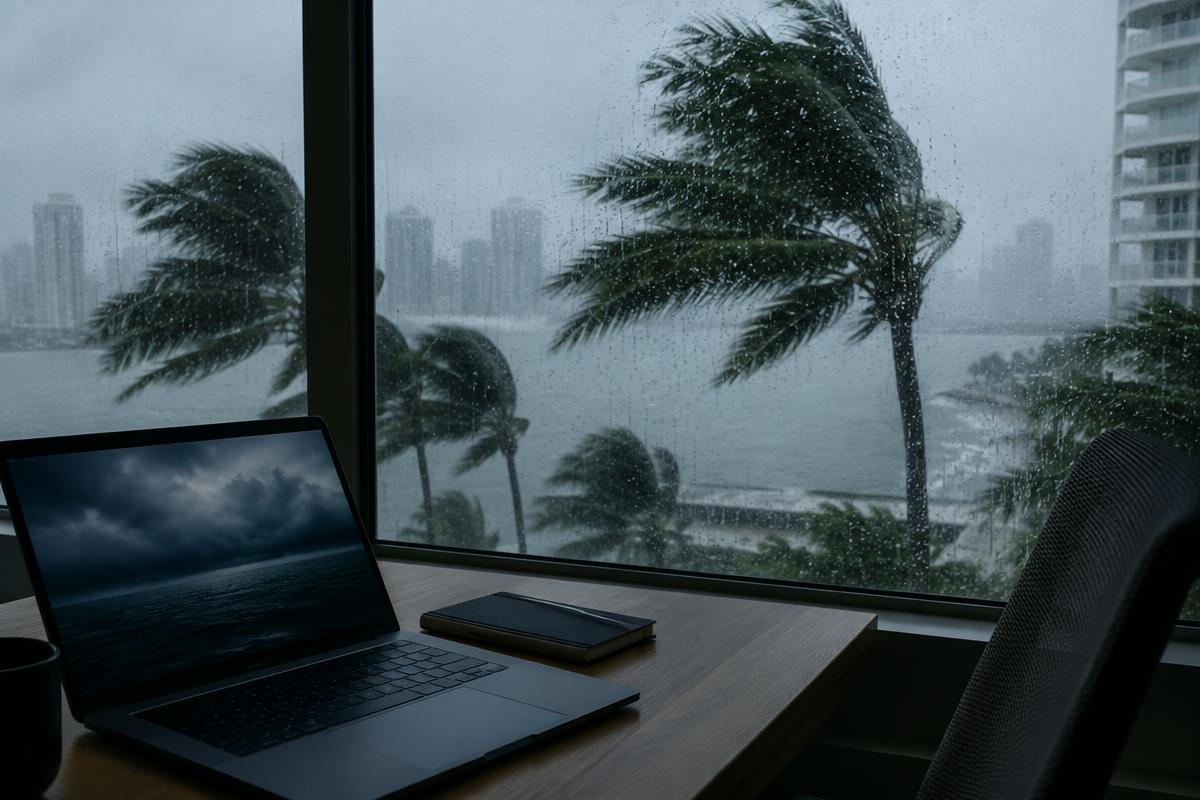
Between June and November, every Miami business is one forecast cone away from a week without power, staff or premises. Lynqos runs this checklist with managed IT clients each spring. It is deliberately boring — continuity is won by tested routine, not heroics during the storm.
Backups you have actually restored
A backup nobody has restored is a hypothesis. Keep three copies of your data, on two media types, with one off-site in a region outside Florida — and restore a real file and a real database every quarter, timed.
- Off-site copy hosted outside the storm path, not in a second Miami office.
- Immutable or versioned backups so ransomware cannot encrypt your recovery.
- A written recovery time objective per system: which comes back in one hour, which can wait three days.
- One named person, plus a deputy, who can run a restore without the CEO's password.
Working when nobody can reach the office
- 1Confirm every critical system is reachable from a laptop on a phone hotspot, tested before June.
- 2Keep laptops, chargers, power banks and a cellular hotspot charged and inventoried.
- 3Publish an out-of-office phone tree and a customer message you can send in twenty minutes, in English and Spanish.
- 4Document who can authorise payments and purchases if leadership is unreachable.
- 5Store the plan somewhere readable without company Wi-Fi, VPN or power.
The physical layer people forget
- Servers and switches raised off the floor, never in a ground-level closet that has ever taken water.
- UPS batteries tested, not merely present — they age out silently in three to four years.
- Photograph the rack, cabling and serial numbers for insurance before the season starts.
- A clean shutdown procedure posted on the wall, so the last person out does it correctly.
The first 48 hours after the storm
Bring systems back in a deliberate order: identity and email, then finance, then operations, then everything else. Check for fraudulent access attempts — storms are reliably followed by phishing that impersonates recovery vendors and insurers. Then write down what failed while it is still fresh; that note is next year's plan.
Frequently asked questions
How often should a Miami business test disaster recovery?
At minimum once per quarter for file restores, and a full failover rehearsal before hurricane season each spring. Untested recovery plans fail roughly as often as they succeed.
Is cloud hosting enough for hurricane continuity?
It removes the physical risk of your office but not the human one. You still need tested access from outside the office, documented authority, and backups in a region outside Florida.
Does Lynqos provide managed IT support in Miami?
Yes. We provide helpdesk, monitoring, backup management and continuity planning for Miami businesses, including on-site support in Miami-Dade.