Skip to content
LYNQOS
Dental practices · Treatments · Appointment requests

Dental Website Design That Fills Your Appointment Book

Quick answer:

Dental website design should help a patient understand your treatments, meet your team and request an appointment without sharing medical details. We build fast mobile pages with clear booking paths, accurate insurance information and local search foundations, with every clinical statement reviewed by your practice.

Help patients choose before they call

A prospective patient may arrive with a practical question rather than a wish to browse: do you see children, offer emergency appointments, accept their insurance or provide an option for a missing tooth? A homepage listing every dental service cannot answer all of those questions well. Your website needs an easy route from the concern to the relevant treatment page and then to your reception team.

We approach dental clinic web design around those decisions. A new patient should see your real location, opening hours, contact details and appointment process before encountering a long introduction. Someone returning to your practice should find directions or a scheduling link without repeating the same journey. The goal is a clear, reassuring first contact, not a promise that a website alone will fill every appointment slot.

Website essentials for a dental practice

Treatment pages with a useful next step

We create pages for the treatments you actually provide, such as preventive care, restorative dentistry or cosmetic options. Each explains who the service may suit, what happens at a consultation and which questions the patient should ask your clinician. We do not diagnose visitors or write claims about suitability without your approval. Distinct pages also give search engines a clearer description of your practice than one crowded services list.
Booking that respects reception workflows

If your scheduling platform supports online appointments, we can connect the website to it after checking the integration requirements. Otherwise, a short appointment request collects contact details and a preferred time, with clear wording that reception must confirm availability. We keep forms simple and avoid collecting health details online. Medical history, symptoms in detail, records and identification documents belong in the practice's approved intake workflow, not a general marketing form.

Insurance, financing and practical information

We present only the insurance and financing information your team confirms. If benefits depend on the patient's policy, the page should say reception can help verify them rather than promise coverage. Directions, parking, accessibility information and accepted payment methods also deserve clear space. Those details help people act without making them call merely to find basic information hidden in a footer.

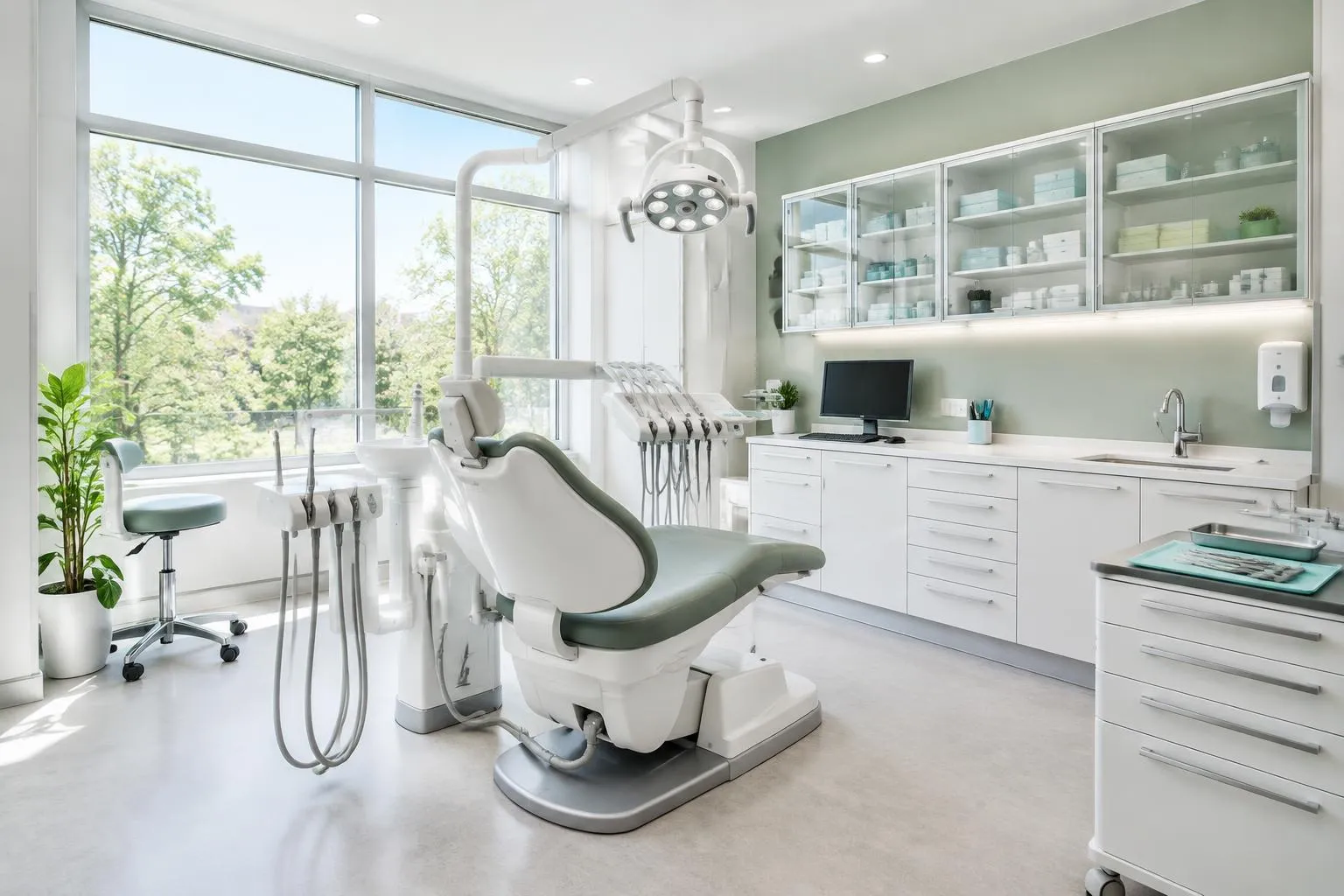
Illustrated dental practice with a treatment chair and examination equipment

What the best dentist websites have in common

Strong dental websites make the practice understandable on a phone. Treatment names are readable, navigation is short and the appointment action remains easy to locate. Images load at an appropriate size instead of slowing the page with oversized files. Text does not sit over a busy clinical photograph, and important details remain available without a carousel or animation finishing first.

Real team and practice photos are particularly useful because patients want to know who they will meet. We use approved photography when available and distinguish illustrations from real practice evidence. Credentials must match your clinicians' current qualifications. Reviews can be shown honestly with their source and any necessary permission; we never supply invented patient names, ratings or success stories to make a new site appear established.

Accessible design is part of this work: readable contrast, labeled forms, meaningful image descriptions and keyboard-friendly controls. We test practical paths such as locating a treatment, finding the phone number and requesting an appointment. That testing is more helpful than judging the site only from a full-screen desktop mockup.

Give each treatment a clear search foundation

We build titles, descriptions, heading structure and internal links around real patient questions and your confirmed services. An emergency dentistry page needs different information from a routine checkup page. If you do not offer an after-hours service, the website must not imply that you do. Service descriptions should match the information in your Google Business Profile and other public practice listings.

For a broader visibility plan, explore our dental SEO service and Miami local SEO. Website design provides the structure; ongoing search work keeps content and business information current. We can also prepare answer-first explanations for AI tools, but nobody can guarantee rankings or that ChatGPT, Gemini or Google AI Overviews will mention a practice.

How to compare dental website design companies

Ask a potential partner how they would organize your treatments, who writes and approves the copy, and how appointment requests reach reception. Request examples of mobile navigation and forms rather than relying only on a polished homepage. Clarify who owns the domain, content and accounts, and what support is available when insurance information, staff or hours change.

It is also worth asking what is excluded. Photography, a practice-management integration, translation and additional treatment pages can change the scope. An agency should explain those decisions before asking you to choose a package. We do not claim that a general website build is HIPAA compliant; any handling of protected health information requires a separate evaluation of the tools, agreements and operating procedures with your qualified advisers.

Our process for dental websites

01

Map the patient journey

We start with your services, location, patient mix and reception workflow. Together we decide which pages answer common questions and what the website should collect. Your practice identifies the person responsible for clinical and privacy review so approvals are clear from the beginning.

02

Write, design and review

We organize the page plan, prepare plain-English copy and design the mobile experience. Your team checks treatment descriptions, credentials and insurance wording. Booking links and request forms are tested with realistic nonmedical information before launch, including confirmation messages and where each request is delivered.

03

Launch and maintain the essentials

We check navigation, images, page metadata and contact actions, then review the launch with your practice. For an existing site, we map important URLs and necessary redirects rather than discard useful pages. Ongoing work can include updated team profiles, revised service information and search reporting, according to the agreed scope.

Pricing and your website scope

The estimate depends on treatment pages, content writing, design, languages and scheduling integrations. Use See your price in under a minute to explore our published options, then check pricing and plan terms. A custom patient portal or specialized practice-system connection needs its own quote; it should not be mistaken for a standard booking link.

We explain what is included before work begins and separate website work from advertising spend or clinical software costs. Start with the information patients need most, then decide which additional features genuinely help reception and visitors. You do not need an elaborate portal simply to make a first appointment request easier.

See pricing

FAQ

Get my exact quote for a dental website

Tell us which treatments you offer, how patients currently book and what feels difficult on your existing site. We will recommend a practical starting scope and explain the next step without asking you to share patient records.

Call · Text · Get my exact quote

— The Lynqos Team