A real, mobile-friendly menu
Your menu in HTML text, not a PDF or an image. It loads fast on a phone, it's easy to update, and search engines and AI assistants can read it. Dietary labels (vegan, gluten-free) and prices help guests decide.

A good restaurant website answers four questions in seconds: what's on the menu, when you're open, where you are and how to book or order. It needs a fast mobile menu in real text (not a PDF), reservations, direct online ordering, photos of your real food and space, events and private dining, and accurate hours everywhere. Lynqos designs restaurant websites that rank in local search, show up in AI answers and bring more guests through the door.

People decide where to eat fast, usually on a phone, often while already out. They search "best tacos near me," glance at photos, check the menu and the hours, and either book, order or move on. Your restaurant website has a few seconds to make your place the obvious choice.
Many restaurant websites still hide the menu in a PDF, show outdated hours, or send every order to a third-party delivery app that takes a cut. Each of those costs you guests or margin.
Your menu in HTML text, not a PDF or an image. It loads fast on a phone, it's easy to update, and search engines and AI assistants can read it. Dietary labels (vegan, gluten-free) and prices help guests decide.
A reservation button in the header and a direct online ordering option, connected to the platform you already use. Direct ordering keeps the customer relationship and part of the margin that delivery apps would take.
Hours, address, parking, a map and a click-to-call button on every page, consistent with your Google Business Profile. Holiday hours updated in both places.
Professional photos of signature dishes, the dining room, the bar and the team. Real photos sell the experience; stock photos make guests suspicious.
Separate pages for private events, catering, happy hour, brunch or live music, each with a simple inquiry form. These pages often bring the biggest checks.
Genuine reviews, your rating and any real press coverage, close to the reservation button.
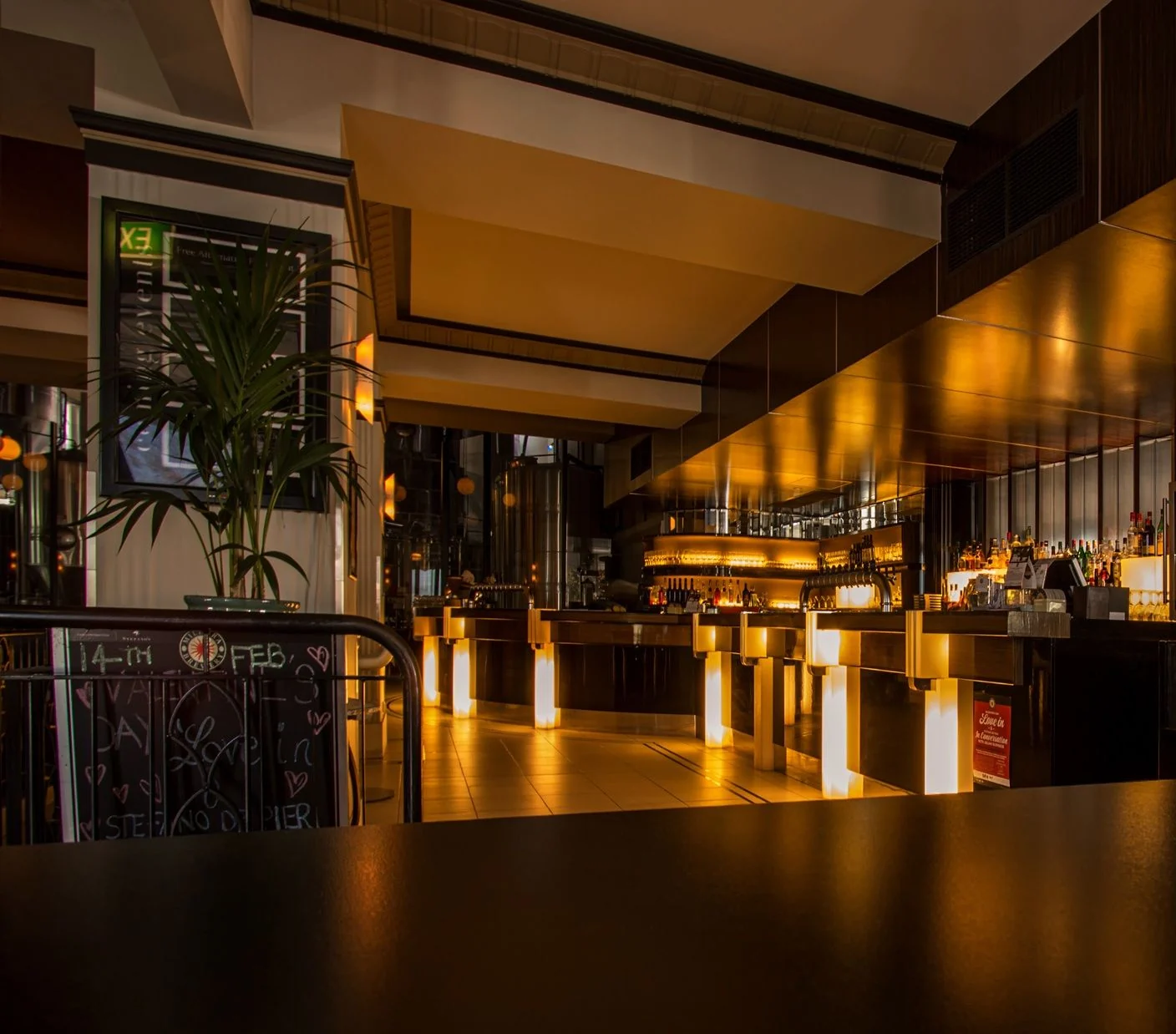
A great restaurant website feels like your venue: warm, inviting and easy to navigate. The most important thing is simple: help diners decide, then make it super easy to book, order or visit.
Your home page should show your cuisine, your atmosphere and your location in one screen, with the online menu and a reservation or order button right there. A simple design with one great photo beats a busy slideshow.
Menus should be easily accessible from the homepage and from every page. Organize menu items by course, add short, vivid descriptions and mark dietary options, so guests can browse and choose before they arrive. Keep prices and seasonal dishes updated in real time.
Who's in the kitchen? Where do the recipes come from? A short story about your chef, your family or your sourcing turns a meal into a destination and gives people a reason to choose you over other brands nearby.
Photos of real guests (with permission), events, your team and your neighborhood help visitors imagine themselves at your tables. Link your social media platforms so diners can explore your latest dishes, and embed recent posts where it makes sense.
A loyalty program, email or text sign-up, gift cards and a "join us for events" list help you bring diners back. A short feedback form lets guests share comments with you directly.
A strong first screen: one great photo, your name, what kind of food you serve and a "Reserve" or "Order" button.
Menu one tap away, in readable text.
Consistent branding from the website to the menus, signage and social media.
Fast pages, with optimized photos.
Up-to-date information, because nothing loses a guest faster than wrong hours.
Reviews: 97% of consumers read reviews for local businesses, and 54% visit the business website after reading positive reviews (BrightLocal, Local Consumer Review Survey 2026).
AI discovery: 45% of consumers now use AI tools like ChatGPT to find local business recommendations, up from 6% in 2025 (BrightLocal, 2026).
Speed: 53% of mobile visits are abandoned when a page takes longer than 3 seconds to load (Google, 2016).
Most diners check your restaurant on a phone, so responsive design isn't optional: the menu, the reservation button and mobile ordering must work perfectly on a small screen.
Use your brand colors consistently across the website, menus, signage and social media to strengthen your identity online.
Embed recent customer reviews near the reservation button to build trust with potential diners.
Keep one clear reservation button and one clear order button, visible at all times. Clear calls to action make the next step obvious.
Keep content fresh: seasonal menus, new dishes and upcoming events signal activity to search engines and give regulars a reason to come back.
| Feature | Why it matters |
|---|---|
| HTML menu | Fast on mobile, readable by Google and AI |
| Reservations button | Turns interest into a booked table |
| Direct online ordering | Keeps the customer and more of the margin |
| Hours, map and click-to-call | Answers the most common questions |
| Events and private dining pages | Brings larger checks |
| Real photos | Sells the experience |
| Reviews and press | Builds trust before the first visit |
Online ordering and reservations are where your website pays for itself. A few best practices:
Keep ordering on your own site where possible, so the customer stays your customer.
Show real-time availability for reservations, and let guests save their details for next time.
Make pickup and delivery options clear, with fees and times shown before checkout.
Sell gift cards and merchandise through a simple online store if it fits your brand.
Offer private dining and catering inquiries on the same page as events, with a short form.
Extra tools like waitlists, table preferences or pre-ordering for large groups can help busy venues, as long as the main path stays simple.
Looking for inspiration? Look at great restaurant websites in cities known for food, like New York, Miami or New Orleans, and notice what they do well: big, honest food photography, simple navigation, a menu you can read on a phone and a clear way to book. A great example doesn't need to be complicated. It needs to feel like the restaurant and make the next step obvious.
A portfolio of real hospitality websites that load fast and look great on mobile.
Experience with reservation and ordering platforms.
SEO and AI search knowledge, including menu markup and Google Business Profile alignment.
Easy updates: you should be able to change menus, hours and events yourself.
Clear ownership of your domain, website and content.
Every restaurant website we build includes local SEO foundations, schema markup (Restaurant, Menu, FAQPage), Google Business Profile alignment and answer-first content. When someone asks an AI assistant "Where should I eat Cuban food near me tonight?", a clear website with a readable menu, accurate hours and consistent details helps it understand and recommend your restaurant. See our local SEO and answer engine optimization services.
Templates and website builders can work for a start, but they often push PDF menus, slow galleries and generic layouts. A custom restaurant website is built around your concept, your menu and how you want guests to book or order. If you already have a site, we can redesign it without losing what ranks today.
Discover. A 20-minute call about your concept, menu, booking and ordering tools, and goals.
Plan. We map the pages and plan the reservation and ordering flow.
Design and build. Custom design, mobile-first, with your real photos.
Launch and grow. We launch, connect tracking and keep menus, hours and events up to date.
The cost of a restaurant website depends on the number of pages, menus and locations, photography, and integrations like reservations or online ordering. Our packages are on the pricing page.
A mobile-friendly menu in text, reservations, online ordering, hours, location, real photos, events or private dining pages and reviews.
No. A text menu loads faster on phones, is easier to update and can be read by search engines and AI assistants.
Yes. We connect the tools you already use, so guests can book or order from any page.
By ranking in local search and Google Maps, keeping hours and menus accurate everywhere, collecting reviews and making booking and ordering easy on mobile.
Yes. Each location gets its own page with its menu, hours, address and booking link.
Yes. We build websites for restaurants across the United States.
Use a text menu, not a PDF, organized by course with short descriptions, dietary labels and current prices. Link to it from the home page and every other page.
Add a loyalty program or email sign-up, sell gift cards, promote events and make it easy to book again. A short feedback form helps you hear from guests directly.
Guests decide in seconds. Let's make your website the reason they choose you tonight.
— The Lynqos Team