Skip to content
LYNQOS
Relevance · Distance · Prominence

Google Maps Ranking and Local SEO Services in Miami

Quick answer:

Your Google Maps ranking in Miami depends on three things Google names itself: relevance, distance and prominence. To rank higher on Google Maps, your Google Business Profile has to match the search, be close to the searcher and look like the most trusted option nearby. Lynqos improves those signals and tracks your map position street by street across your service area.

Why the Google map pack matters

When someone searches "roof repair near me" or "dentist Coral Gables," Google usually shows a map with three businesses before anything else. This is the Google map pack, also called the local pack or the Google 3-pack. Below it, a "More places" link opens the full list on Google Maps.

For many local searches, especially on mobile, the map pack is where the decision happens. People compare the three businesses, look at stars and photos, and tap "Call" or "Directions" without ever visiting a website. If you're not in those three spots, you're often not in the conversation.

Google Maps SEO: what it is

Google Maps SEO is the work of improving how your business appears in Google Maps search results and in the Google local pack on regular Google Search. It's a core part of local SEO, focused on your business listing rather than your website alone.

When local searchers look for a service with local intent, like "AC repair near me" or "Cuban bakery in Little Havana," Google shows nearby businesses that match. Those local queries happen on desktop, in the Google Maps app and, most of all, on mobile devices. More visibility in those results means more phone calls, more direction requests and more foot traffic.

The better your profile matches relevant searches, the closer you are to the searcher and the stronger your reputation, the better your chances of appearing among the top-ranking businesses. That's true whether you run a coffee shop, an Italian restaurant, a law office or a roofing company.

Little HavanaCoral GablesDoralKendallWestchesterHialeah
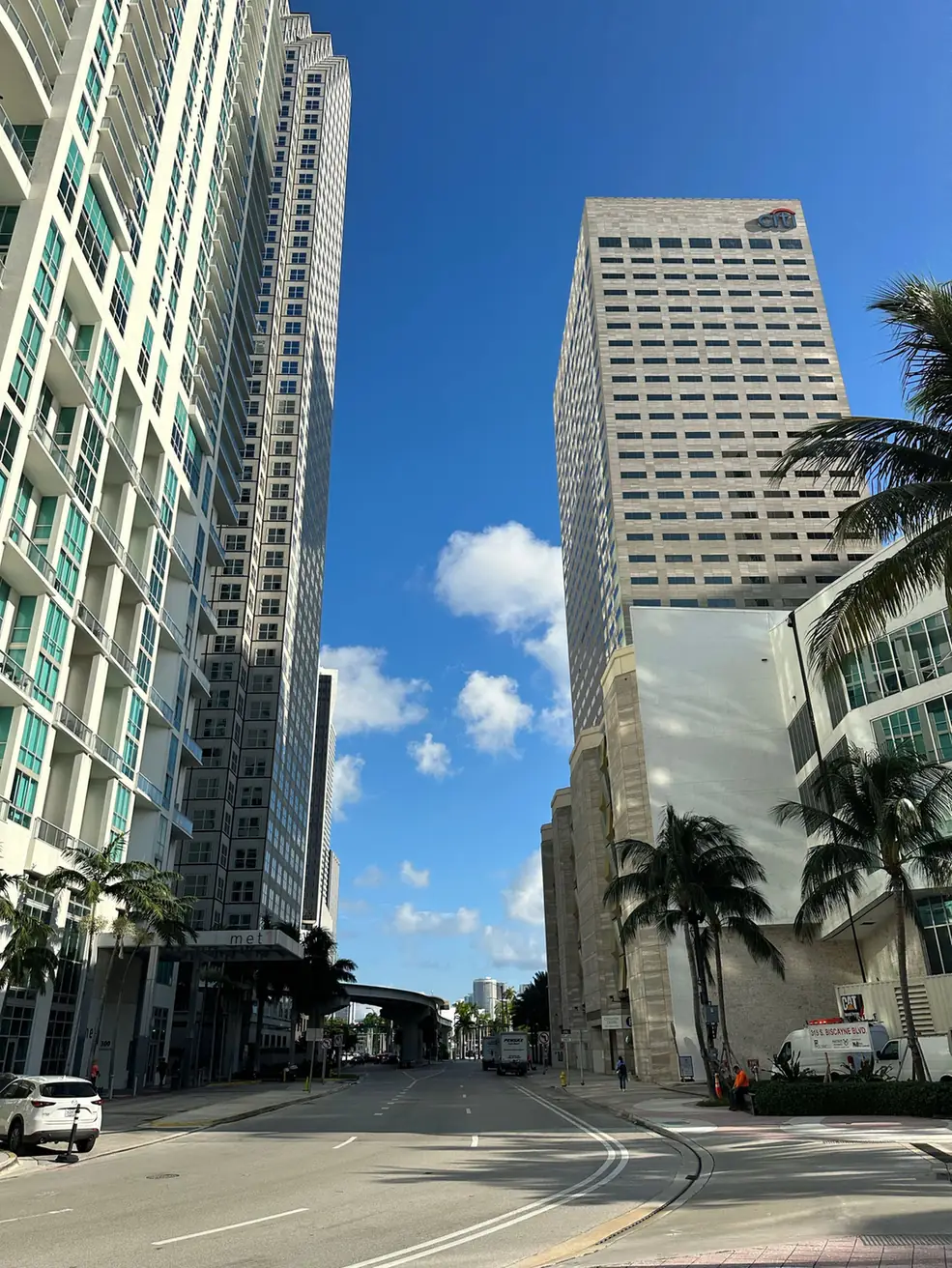
Palm trees and downtown high-rise buildings

How the map pack decides: relevance, distance, prominence

Google explains that local results are based mainly on three factors.

Relevance

How well your Business Profile matches what someone is searching for. Your primary category, secondary categories, services, description and the content on your website all tell Google what you do. The wrong primary category is one of the most common reasons a business doesn't show up.

Distance

How far your business is from the person searching, or from the location named in the search. You can't change where you are, but you can make sure Google knows exactly where you are and which areas you serve.

Prominence

How well known and trusted your business is. Google looks at information from across the web: reviews (count and score), links and articles, directories and your overall presence. Google also says that your position in web results factors into local ranking, which is why your website matters for Maps too.

Why you rank on one street and not the next

Here's something most business owners don't realize: there's no single "Google Maps ranking." Your position changes depending on where the searcher is standing.

You might be first in the map pack for someone two blocks from your office, fifth for someone in the next neighborhood and invisible ten minutes away. In a dense market like Miami, with competitors in every zip code, that drop can happen quickly. A business in Doral may rank well in Doral and barely appear in Kendall or Westchester.

That's why we track your map position on a grid, not as a single number. We check your ranking from dozens of points across your service area and show you a map: green where you're in the top three, red where you're not. That makes the problem, and progress, easy to see.

Why your business doesn't show up on Google Maps

The most common reasons we see:

Wrong or too-broad primary category. "Contractor" instead of "Roofing contractor."

Incomplete profile. Missing services, hours, attributes, photos or description.

Inconsistent information. Different names, phone numbers or addresses across the web.

Few or old reviews. Competitors with more recent reviews look more active and trusted.

Weak website signals. No page clearly about the service or the area.

Profile issues. An unverified profile, a duplicate listing or a suspension.

Distance. The search comes from too far away for your business to compete, at least for now.

What we change to improve your Google Maps ranking

Google Business Profile optimization

We choose the most accurate primary and secondary categories, complete every relevant field, add services with descriptions, set your service areas, upload real photos and keep the profile active with regular posts. See our Google Business Profile optimization service.

Website alignment

Your Business Profile links to your website, and Google reads it. We make sure your site has a strong page for each core service, clear location signals, schema markup and a name, address and phone number that match your profile exactly.

Citations and consistency

We clean up your listings on Apple Maps, Bing Places, Yelp, Facebook, BBB and industry directories so every source confirms the same information.

Reviews

We help you set up a steady way to ask satisfied customers for reviews and reply to every one. A regular flow of genuine reviews matters more than a one-time burst. We never buy, fake or gate reviews: it breaks Google's policies and can get your profile penalized.

Local prominence

Local links and mentions build prominence: chambers of commerce, associations, sponsorships, local press, partner businesses and community involvement in Miami.

Behavior signals we can influence

Good photos, accurate hours, quick replies to messages and helpful posts make people more likely to call, click and ask for directions. That engagement reflects a profile that serves customers well.

A step-by-step plan to rank higher on Google Maps

1. Claim and verify your profile

Claim your Google Business Profile and complete verification. Verification can take from a few days to a couple of weeks, depending on the method Google offers. Until it's verified, many changes won't show.

2. Use your actual business details

Use your actual business name, business address (or service area), phone number and business hours. Keep them identical everywhere: on your website's contact page and about us page, and on every listing. Citations must have consistent NAP (name, address, phone) across all platforms.

3. Write a useful business description

Your business description should explain what you do and where, and naturally include relevant keywords. Incorporate local keywords into your description, without stuffing them.

Explain your actual services and service area in plain English. A useful description helps a customer decide whether you are relevant; it should not claim offices, credentials or coverage your business does not have.

4. Upload high-quality photos

Upload high-quality photos of your work, team, storefront and vehicles. Fresh photos show Google and customers that the business is real and active.

Choose clear, current images that show the business customers will actually encounter. Obtain permission where needed and avoid exposing private customer information in work photos.

5. Build steady reviews

Encourage customers to leave reviews after every job, with a direct link to your review form. The algorithm tends to value recent, steady reviews over a large count of old ones. Consistent review generation is crucial for maintaining visibility, and businesses with more positive reviews tend to rank higher and win more clicks. Responding to reviews shows you care.

6. Get listed on local directories

Getting listed on online directories creates NAP citations: Apple Maps, Bing Places, Yelp, BBB, industry directories and Miami-area local business listings. Clean up duplicate listings at the same time.

7. Earn local backlinks

Backlinks from local websites signal community trust to Google: chambers of commerce, sponsors, local events, partners and local news.

Prioritize genuine relationships and relevant references over a large count of unrelated links. A local mention should make sense for the business and the reader, not exist only to repeat a Miami keyword.

8. Keep your profile active

Regularly updating your Google Business Profile signals activity to Google. Post updates and offers, answer questions and update hours for holidays.

Make each update useful: accurate holiday hours, an available service or a current offer. Profile activity is not a guarantee of better positions, so judge changes alongside customer actions and the quality of inquiries.

9. Find the right local keywords

Keyword research tools help you find local keywords: the terms nearby customers use when they search for your service. We use them to choose categories, services, posts and website pages.

How we track your map position

We use grid-based rank tracking for your main keywords. Each month you see:

A heatmap of your map rankings across your service area, for each important search.

Average position and how it changed.

Google Business Profile actions calls, website clicks and direction requests.

What we changed that month and what's next.

Can you rank outside your city?

Partly. Distance is one of Google's core factors, so a business in Hialeah won't easily rank in the map pack for searches made in Homestead. You can extend your reach by strengthening prominence and relevance, creating useful pages for the areas you serve and, if you truly have them, adding real locations. Fake addresses and virtual offices break Google's rules and put your profile at risk.

How fast can Google Maps rankings improve?

Fixing categories, completing your profile and cleaning up inconsistencies can move rankings within a few weeks in less competitive areas. In competitive Miami categories, building reviews, links and website signals takes several months of steady work. We show progress on the grid every month, so you're never guessing.

Palm-lined street in Miami Beach

Google reviews and review management

Google reviews are one of the clearest signals you can influence. They tell search engines, and potential customers, that real people chose you and were happy with the result. More reviews help, but quality and consistency matter even more.

Good review management looks like this:

Ask every satisfied customer. Make it easy with a text or email that includes a direct link.

Reply to every review. Thank people for positive reviews. Responding to negative reviews calmly shows professionalism and engagement, and future customers read those replies.

Mention the service and the area naturally. When customers describe the job and the neighborhood in their own words, it helps Google understand what you do and where.

Never fake it. Fake or incentivized reviews break Google's rules and can cost you your profile.

Bilingual Google Maps searches in Miami

Miami's bilingual population often searches in both English and Spanish. Someone might search "plomero cerca de mí" one day and "plumber near me" the next. Your profile, website and reviews should make it clear to Google that your business serves customers in both languages, so you can reach more local customers.

Your primary category matters most

Many local SEO experts consider your primary category one of the strongest ranking factors on Google Maps. It's the first thing we check. A precise category tells Google that your business matches the search, and it controls which features appear on your profile.

When potential customers search for a specific service, Google compares your category, services and website content with the query. The more precise and consistent they are, the more likely you are to appear in the local 3-pack and in local search results.

Multiple locations and service areas

If you have multiple locations, each real location needs its own profile, its own page on your website and its own reviews. That gives each location a chance to rank for nearby customers. If you serve customers at their homes, a service area setup is usually better than listing an address.

Google Maps ranking vs. Google Ads

Google Ads can place your business above or inside the local results with a "Sponsored" label. Paid ads bring visibility right away, but you pay for each click and visibility stops when the budget does. Organic local rankings take longer to build, but they keep bringing calls.

Many local businesses use both: ads for a quick start and peak seasons, and Google Maps SEO for a lasting competitive advantage over other relevant local businesses.

Google Maps marketing pricing

Google Maps optimization is part of our local growth plans, together with your Business Profile, local SEO and reporting. See the pricing page, or book a call and we'll look at your current map visibility together.

See pricing

Google Maps ranking FAQ

Get into the map pack

When a customer nearby searches for what you do, three businesses get the call. Let's work on making yours one of them.

— The Lynqos Team