
Skip to content
LYNQOS
Project galleries · Estimates · Maintenance plans

Landscaping Website Design in Miami for Local Search

Quick answer:

A good landscaping website shows your best work and makes it easy to ask for a quote. It needs a strong project gallery, one page per service, service area pages, a simple quote form, recurring maintenance plans and real reviews, on a fast mobile site. Lynqos builds landscaping websites that rank in local search, show up in AI answers and help lawn care and landscape companies win more projects.

Why landscaping websites are different

Landscaping is visual. Homeowners and property managers want to see what you've built before they call. At the same time, much of your revenue comes from recurring work: weekly lawn care, seasonal cleanups, irrigation checks. Your landscaping website has to do two jobs: sell big design-and-build projects with photos, and make recurring maintenance easy to sign up for.

Many landscaping company websites have one generic gallery, no prices, no service area details and a contact page buried in the menu. That's a lot of beautiful work going unseen.

What a landscaping company website needs

A project gallery that sells

Before-and-after photos and finished projects organized by type: landscape design, hardscapes and pavers, outdoor living spaces, sod installation, planting, lighting and water features. Each project gets a short story: the problem, the design, the result.
One page per service

Lawn care and mowing, landscape design, landscape installation, hardscaping, irrigation installation and repair, tree and shrub care, mulch and planting, outdoor lighting, seasonal cleanups and commercial landscape maintenance. Each page explains what's included, how often and what affects the price.

A simple quote request

A short form with address, service, property size and photos. For maintenance plans, a clear list of what's included per visit and an easy way to start.

Service area pages

One page for each city or area you genuinely serve, with local details like typical lot sizes, HOA requirements or plants that do well in that climate.

Recurring maintenance plans

Weekly, biweekly or monthly plans with clear inclusions. Recurring revenue is the backbone of a landscaping business, and your website should sell it.

Trust signals

License and insurance, certifications, years in business, crew photos, equipment and genuine reviews.

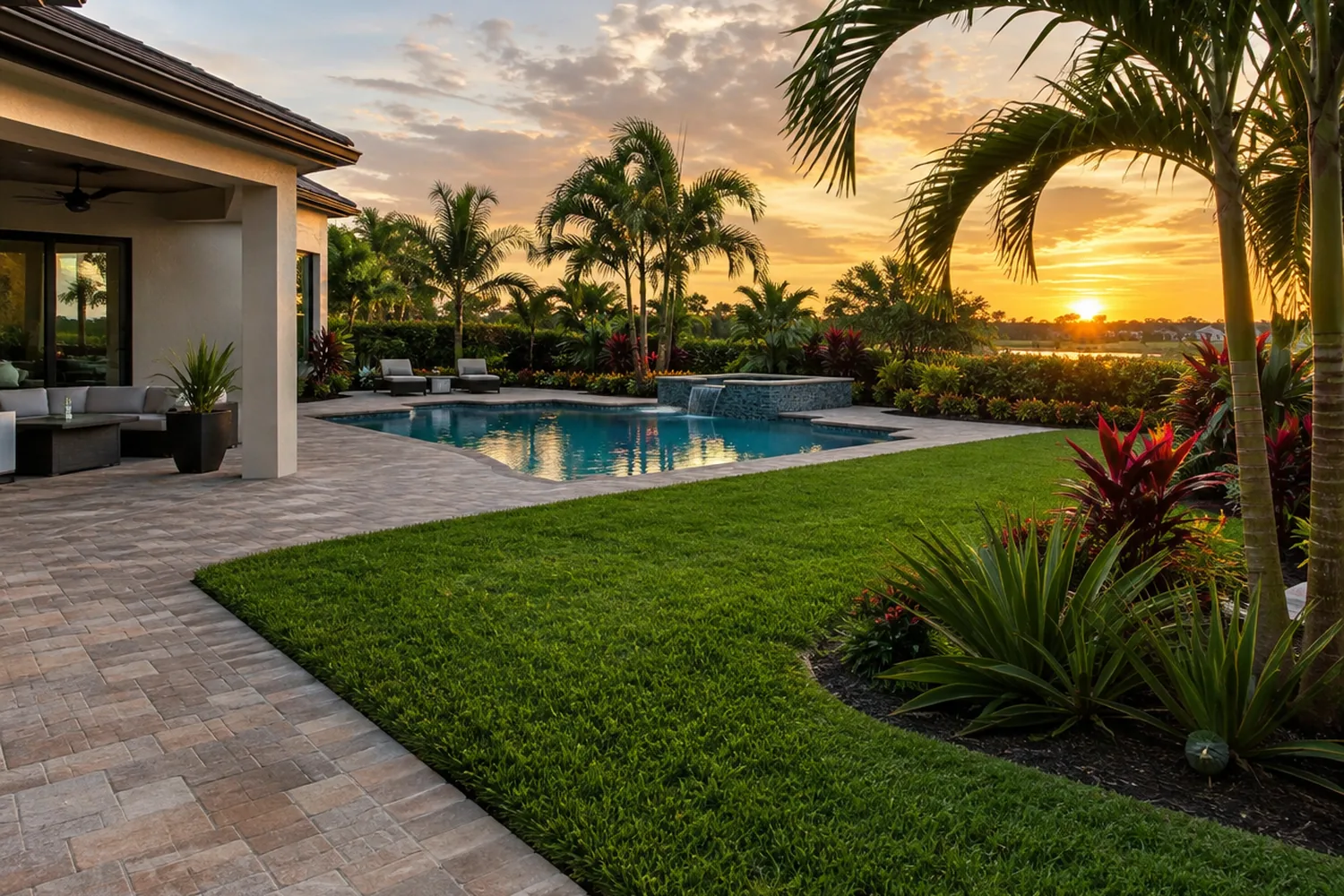
Landscaped Florida backyard with pool and palm trees at sunset

What the best landscaping websites have in common

Big, high-quality photos of real projects, not stock images.

A clear call to action above the fold, like "Get a free quote" or "Start weekly lawn care."

Contact info everywhere, with a sticky call button on mobile.

Easy navigation by service and by project type.

Consistent branding across the website, trucks, uniforms, yard signs and social media.

Reviews next to the work they describe.

Landscaping website design tips

Good landscaping web design follows the same principles as a well-designed yard: structure, balance and a clear path. Here are the design tips we use on every landscaping website.

Start with a strong hero section

The hero section is the first screen people see. Use one great hero image of a finished project, your company name, a short headline that says what you do and where, and two clear calls to action: "Get a free estimate" and your phone number. A split screen layout, with a photo on one side and the headline and buttons on the other, works well on desktop and stacks cleanly on mobile.

Use white space and a calm color scheme

A modern design leaves room to breathe. Generous white space, a simple color scheme inspired by your brand (greens, earth tones or a clean neutral palette) and large, readable type let your photos carry the visual appeal.

Keep the main menu short

Services, projects, service areas, reviews, about and contact. A short main menu helps potential customers find what they need in one tap, and a sticky header keeps your phone number visible.

Build a services section that sells

Your services section should give each service a photo, a one-line benefit and a link to its own page with clear descriptions: what's included, how often, what affects the price and what to expect.

Offer several contact options

Phone, text, a quote form with photo upload and online booking for maintenance plans. Different clients prefer different contact options, so make every one of them easy to find.

Add a personal touch

Show the team. A photo of the owner and crew, a short story about how the company started and why you love this work makes your landscaping business feel local and trustworthy.

Why reviews and speed matter

Reviews: 97% of consumers read reviews for local businesses, and 54% visit the business website after reading positive reviews (BrightLocal, Local Consumer Review Survey 2026).

Speed: 53% of mobile visits are abandoned when a page takes longer than 3 seconds to load (Google, 2016). Large project photos need to be optimized so your gallery stays fast.

Show your work: photo galleries and design examples

For a landscaping company, your own work is your best marketing. A strong photo gallery turns browsers into potential clients.

Use high quality images of completed projects, shot in good light, ideally with before-and-after pairs.

Organize the gallery by project type: outdoor living spaces, pavers and patios, planting and garden design, lighting, water features, lawn renovations and commercial properties.

Tell a short story for each project: the outdoor space before, what the client wanted, what you designed and built, and the result.

Add design examples that help homeowners imagine their own yard, like small backyard ideas, low-maintenance front yards or pool-side planting.

Show proof from past clients: Google reviews next to the projects they describe, and short quotes with permission.

Connect your Instagram feed if you post projects regularly, so your site always shows recent work.

Beautiful outdoor spaces sell themselves when people can see them. Great landscaping deserves a gallery that loads fast and looks as good on a phone as on a desktop.

Mobile-first, fast and responsive

Most homeowners look for a landscaper on a phone. Google uses mobile-first indexing, so the mobile version of your site is the one that counts for rankings. Every landscaping website we build uses a responsive design, compressed images, lazy-loaded galleries and a sticky call button.

Landscaping website features

FeatureWhy it matters
Project gallery by typeShows the quality of your work
Quote form with photo uploadMakes it easy to start a project
Service pagesRanks for searches like "paver installation near me"
Service area pagesSupports local and Google Maps rankings
Maintenance plan pageBuilds recurring revenue
Reviews and certificationsBuilds trust before the first visit
Fast mobile pagesKeeps visitors who browse on their phone

Custom landscaping website vs. a template

Templates and website builders are a fine first step, but they rarely make room for a strong gallery, service area pages and solid local SEO. A custom website is built around how your landscaping business actually wins work, residential or commercial, design-build or maintenance. If you already have a site, we can redesign it without losing what ranks today.

Landscaping web design that generates leads

Lead generation is the core of any landscaping website. Every page should move visitors toward a call, a free estimate or a maintenance plan sign-up.

Make the free estimate easy

A short estimate form with address, service, property size, budget range and photo upload. Ask only for what you need to qualify the job.

Sell maintenance plans online

Show what's included in each plan, how often you visit and how to start. Recurring clients are the most valuable leads a landscaping business can get.

Answer common questions

FAQs about cost, timelines, plant choices, irrigation and seasonal care remove doubts before the call, and help search engines and AI assistants understand your expertise.

Track what works

Call tracking, form tracking and analytics show which pages and services bring more leads, so you can focus on the work you want more of.

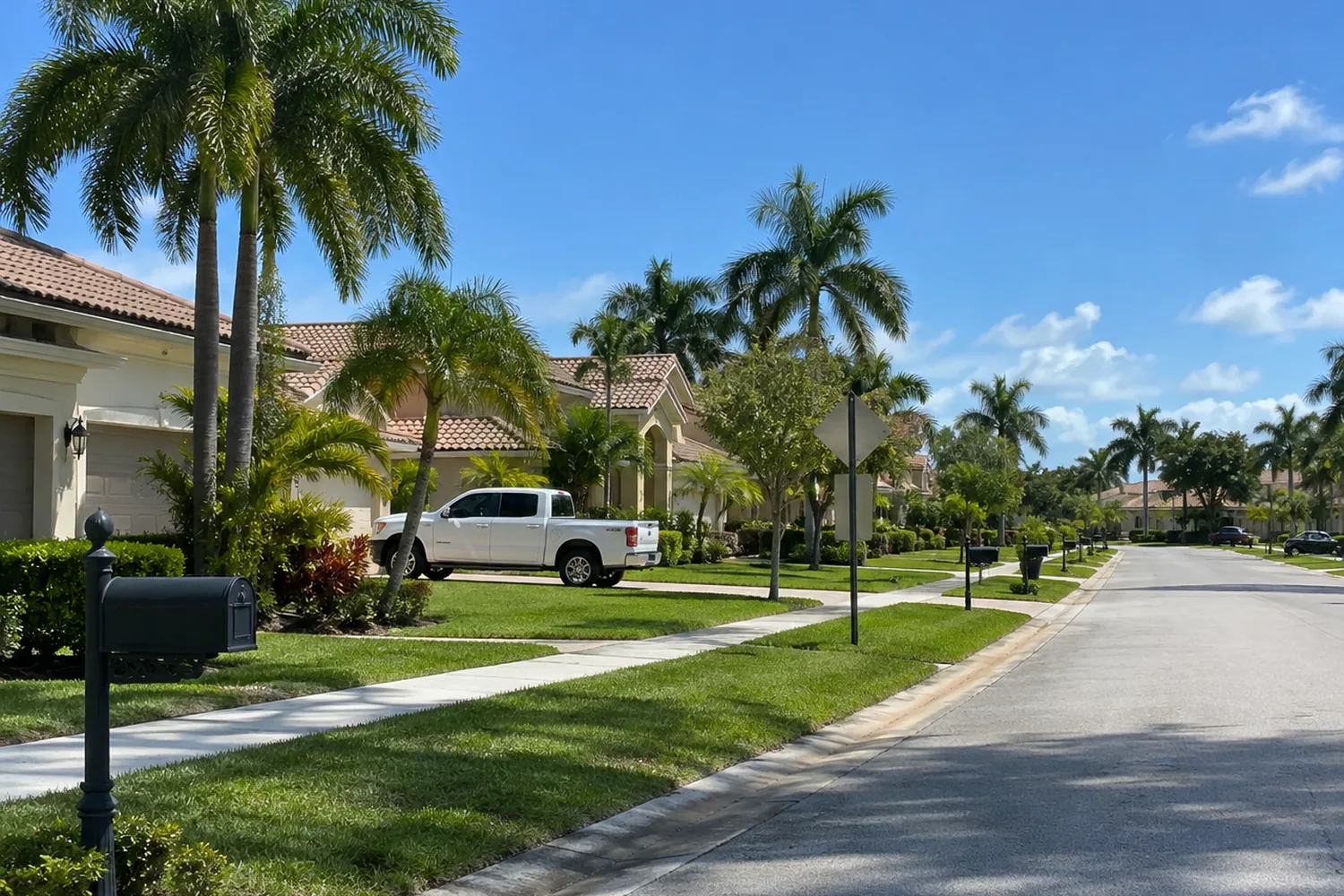
Well-kept lawns on a palm-lined South Florida street

Your own landscaping website vs. directories and social media

Directories, lead marketplaces and social media can bring work, but you don't control them. Their rules change, leads are shared with competitors and your profile looks like everyone else's. Your own landscaping website is the one place where you control the message, the design and the contact path. Your own site also connects everything: Google Business Profile, ads, social media and email all point back to it.

How to choose a landscaping web design company

When you compare web design companies, look for:

A portfolio of real websites and a clear explanation of what they did and why.

SEO knowledge: keyword research, page titles, meta descriptions, schema markup and local SEO.

Understanding of conversion: how a landscaping website turns visitors into estimates and maintenance clients.

Experience with home services and seasonal businesses.

Clear ownership: you should own your domain, your website and your content.

Benefits of custom landscaping web design

More leads from the same traffic: clear calls to action, fast pages and easy estimate forms.

A brand people remember, consistent from your website to your trucks, uniforms and yard signs.

A gallery that does the selling while you're on a job site.

An efficient solution for your team: leads go straight to your phone, CRM or scheduling tool.

Room to grow: add services, service areas and projects without rebuilding your site.

Our landscaping website design process

01

Discover. A 20-minute call about your services, area, best projects and goals.

02

Plan. We map the pages, write the content and plan the quote flow.

03

Design and build. Custom design, mobile-first, with your real project photos.

04

Launch and grow. We launch, connect tracking and add new projects over time.

Highlight what makes your landscaping work different

The best landscaping websites balance visual storytelling with lead capture: beautiful photos that make people dream, and a clear next step right beside them. Two details make a big difference:

Eco-friendly practices. Native and drought-tolerant plants, smart irrigation, organic lawn care or battery-powered equipment can be strong selling points for modern homeowners. If you offer them, give them their own section or page.

A transparent process. Break down how a project works, from the first visit and design to installation and aftercare, with typical timelines. A clear process reduces customer anxiety and makes the first call easier.

Website options: DIY, done-for-you or custom

Landscapers usually choose between three options:

A DIY website builder: a low monthly cost and a site that can be live quickly, but you do the design, writing and SEO yourself.

A done-for-you template service: a setup fee plus a subscription, with a site delivered fast on a shared template.

A custom website from an agency: a bigger investment, built around your services, your photos and your local market, with SEO and conversion planned from the start.

The right choice depends on your goals. If your website needs to bring a steady flow of estimates and maintenance clients, custom usually pays off.

Landscaping website cost

The cost of a landscaping website depends on the number of service and location pages, the gallery, content and integrations like a CRM or scheduling tool. Our packages are on the pricing page. For other trades, see contractor website design.

See pricing

Branding and inquiries built around your workflow

Identity beyond the project gallery

We can scope an identity for crew clothing, trailers and estimate materials, alongside the website. A photoshoot or print production is not assumed to be included. Supplied photos must be authorized and are not replaced by stock images presented as completed client work.

Separate maintenance routes from installation projects

Weekly lawn care and landscape installations need different request details. We collect property type, location and the requested service so your team can confirm route coverage or prepare a project estimate before committing to the work.

Landscaping website design FAQ

Get a landscaping website as good as your work

Your projects speak for themselves. Let's make sure the right clients see them.

— The Lynqos Team